Top Wood Flooring Installation Patterns
Posted by Ben Garelick (@BlueShirtBenny) on 16th Jan 2026
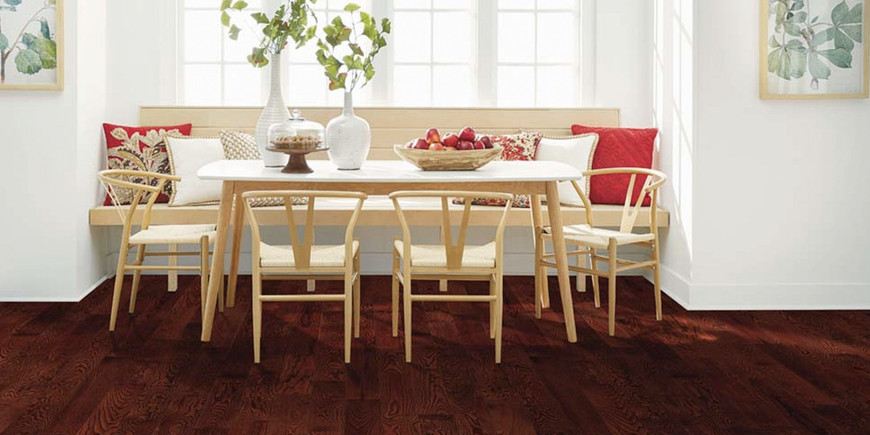
There is something about hardwood flooring, isn't there? It instantly makes a space feel warm and alive. Little wonder it’s a go-to choice for elevating the look and feel of any room. If you’re looking to add character and a sense of craftsmanship and timelessness to your home, you may be curious about wood flooring installation patterns. There are many options to personalize your space.
You probably want your wood flooring to be visually appealing, captivating, and a perfect match for your dream decor, right? Well, this blog is going to walk you through some top wood flooring installation patterns. We'll give you a clear idea of your options and help you determine which one best suits your goals.
The Power of Flooring Patterns
You may be tempted to think of flooring patterns as just lines on the floor or another aesthetic detail, but they are more than that. Think of them as a stylistic tool that influences several aspects of your home design, including how a room feels and functions. Here are some ways flooring patterns impact your space:
- Create visual movement: Each wood pattern uses distinct lines that can create unique visual movements and optical illusions. They guide your eye and influence how you perceive a space. Some patterns can create an illusion that makes a room appear larger than it actually is.
- Establish zoning and transitions: Flooring patterns are a tool you can use to create zones in your home without needing walls or partitions. Take your kitchen and dining room, for example. You can use a flooring pattern in your kitchen and a different one in your dining room, creating a subtle, stylish shift in space and function.
- Express style and mood: Your furniture can showcase your style, and so can your flooring pattern — it can scream Victorian grandeur or speak in soft contemporary tones. It's all about what you want to say.
Wood Flooring Installation Patterns to Explore
Let’s break down some of the top patterns for hardwood floors you can explore.
Straight Lay
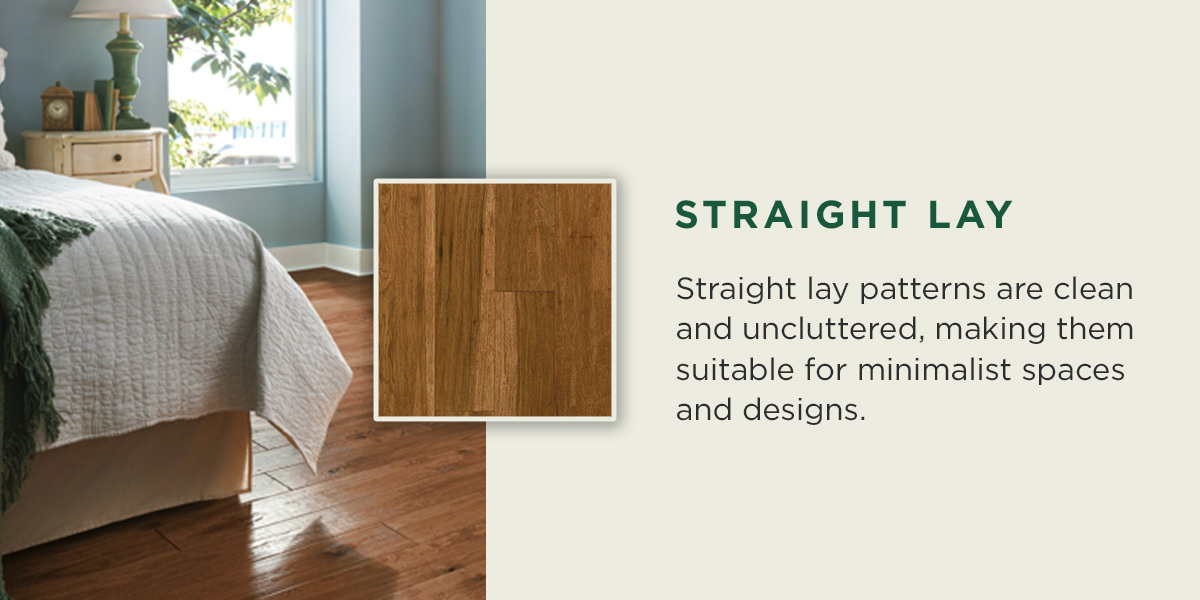
If your goal is to create a simple and classic look for your home, consider the straight lay flooring pattern. The straight lay is the most common wood flooring pattern, and you can achieve it by laying wood boards side by side in a parallel pattern from wall to wall. You can choose to lay them parallel or perpendicular to the room’s longest wall, depending on how you want the area to look and feel. For instance, laying the boards parallel to the room’s longest wall can make a room feel larger.
Straight lay patterns are clean and uncluttered, making them suitable for minimalist spaces and designs. You can also use them as a simple foundation in more decorated, layered interiors. Here are some essential considerations for straight lay flooring installation patterns:
- Installation complexity: This flooring pattern is one of the easiest and quickest patterns to install. Compared to other patterns, it is less complex, requiring minimal expertise and planning.
- Cost: A straight lay installation pattern is more cost-effective and budget-friendly than other intricate patterns, thanks to minimal material waste and low labor costs.
- Durability and maintenance: Due to its structural simplicity, you can count on the durability of straight lay patterns. The linear design makes them super easy to clean and repair — you can easily replace individual boards if they get damaged.
Diagonal Lay
A diagonal layout is another typical installation pattern for wood flooring. It’s similar to the straight lay pattern — you might frame it as a straight lay pattern with a twist. Instead of laying the wood boards from wall to wall, you’ll install them from corner to corner, typically at a 45-degree angle to the walls in the room. This pattern can create an illusion of a bigger size, especially in smaller spaces. It’s also known to beautifully mask imperfections in rooms that aren't perfectly square.
If you want to opt for a diagonal lay pattern, consider the following:
- Installation complexity: Diagonal patterns are more complex to install, requiring a high level of skill and expertise. To achieve a clean look, each cut must be precise, especially at the edges of the room. You might want to hire a professional who knows their way around this pattern.
- Cost: From the labor costs involved in installation to the material waste it may produce, a diagonal pattern may incur higher costs.
- Durability and maintenance: The durability of diagonal wood floor patterns largely depends on the installation. When done right, it can last ages without gaps appearing between boards. Thankfully, this pattern is easy to clean. However, replacing damaged boards requires as much skill as laying them in the first place.
Herringbone
This timeless style of wood flooring features rectangular wood planks arranged in a zigzag pattern, with each meeting another at a 90-degree angle to create a V-shape. You can choose to install this pattern parallel or diagonal to the walls in the room. The Herringbone pattern instantly gives spaces a sophisticated, visually appealing and elegant finish. If you want to add depth and texture, this pattern is the perfect choice.
Here are some important details to note:
- Installation complexity: Herringbone patterns are highly complex to install — they call for detailed measurements and precise cutting to achieve a seamless flow. It’s not a project you want to take on by yourself if you're not an expert.
- Cost: Since you may not have the capacity to install this pattern yourself, you’ll need to hire experienced professionals. You should also prepare for high material waste, which can bump up the total cost.
- Durability and maintenance: The interlocking nature of the planks keeps them stable and, by extension, longer lasting. As for cleaning and maintenance, you’ll have to pay more attention because dust and debris may collect in seams and angles.
Chevron
It’s correct to say that the chevron and herringbone patterns are in the same family, maybe as distant cousins. Chevron is created by arranging rectangular planks end-to-end to form a zigzag pattern with a V shape. The difference between this pattern and the herringbone lies in their appearance. With the chevron pattern, two planks are placed in such a way that they meet at the base, just as the letter V is shaped at the bottom. In contrast, the base of the two planks in the herringbone pattern don't meet — instead, they overlap.
Chevron flooring patterns have a way of making spaces feel larger and more spacious, and they are suitable for achieving a modern look. Let’s break down some must-knows about this pattern:
- Installation complexity: Like herringbone, chevron is complex to install, requiring precise cuts and expert installation.
- Cost: This pattern can be one of the most costly to install due to its labor-intensive installation and specialized material requirements.
- Durability and maintenance: With high-quality materials and proper installation, chevron-patterned floors can be very durable. They are also easy to clean. However, they can be costly to repair.
Elevate Your Space With the Right Hardwood Floor Designs
Your floor is your canvas. You get to choose the flooring that matches your style and overall aesthetic. Choosing the right wood patterns for your space is one piece of the puzzle — choosing high-quality material is the second and most important piece.
For over 50 years, Carpet & Tile Mart has offered a wide selection of high-quality hardwood flooring materials. We’ll be delighted to provide you with all the support you need, from selecting the right hardwood flooring to installation. Contact us today to learn more.