Best Flooring for Flood-Prone Basements
Posted by Ben Garelick (@BlueShirtBenny) on 28th May 2026
If you've dealt with a soggy basement one too many times, choosing the right flooring can transform the space entirely. You'll find waterproof flooring in various styles — from modern luxury vinyl tile to sleek porcelain — that can handle moisture without sacrificing aesthetics or breaking your budget. Whether you're finishing your basement for extra living space or want protection against occasional water issues, the right choice saves you money and hassle.
The Top Waterproof Flooring Options
When shopping for waterproof flooring, you want options that deliver on performance and style. The best flooring for flood-prone basements combines durability, moisture resistance and design flexibility. Let's compare the top contenders so you can find the perfect fit for your space and budget.
Luxury Vinyl Tile (LVT)
LVT's waterproof core and layered vinyl construction keep water from seeping through or damaging your flooring. Plus, LVT delivers premium looks at lower prices than traditional hardwood and tile.
Here's what makes it stand out:
- Completely waterproof: The waterproof core protects against moisture from above and below, so you won't see warping or swelling.
- Incredibly durable: Heavy foot traffic, scratches and dents are no match for LVT, making it perfect for high-use basement spaces.
- Easy installation: Many LVT products feature click-lock systems that make installation straightforward, even for DIYers.
- Endless style options: You'll find a wide variety of looks, from rustic wood finishes to modern stone textures, so you can create the exact aesthetic you want.
Learn more about LVT flooring and its pros and cons to help you decide.
Porcelain Tile
Porcelain tile flooring is another excellent waterproof option that brings both beauty and resilience to flood-prone spaces. Porcelain has a lower water absorption rate than ceramic, making it a better choice for basements that experience regular moisture. You'll find stunning tile options at competitive prices that fit any budget.
Tile is incredibly durable and can last for decades with minimal maintenance. There are endless design options, from classic subway patterns to modern large-format tiles. Using the right underlayment for tile ensures your floor stays level and performs as expected.
Epoxy Flooring
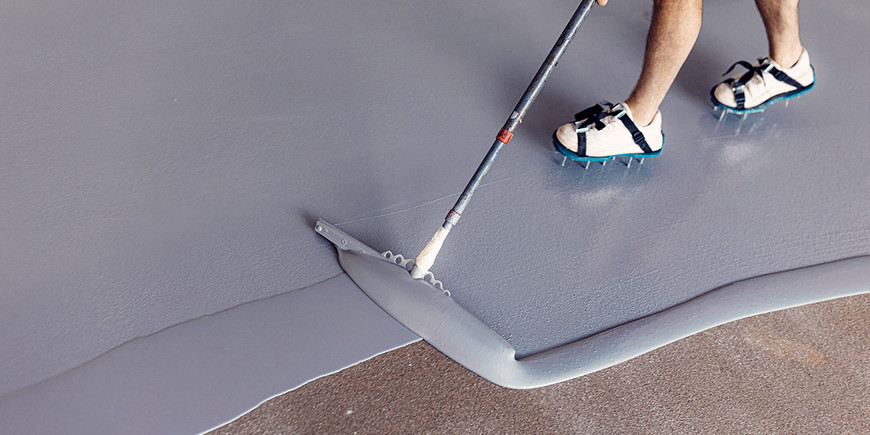
Epoxy flooring creates a seamless, completely waterproof surface that's perfect for basements prone to flooding. It's applied as a liquid coating over your existing concrete subfloor, where it hardens into a tough, durable finish. Epoxy resists water, chemicals, stains and heavy impacts.
However, it can become slippery when wet, so choose a textured finish for safety. Professional installation is also highly recommended. But if you're looking for a low-maintenance solution that can handle moisture, epoxy delivers excellent performance at a great value.
Flooring to Avoid in a Flood-Prone Basement
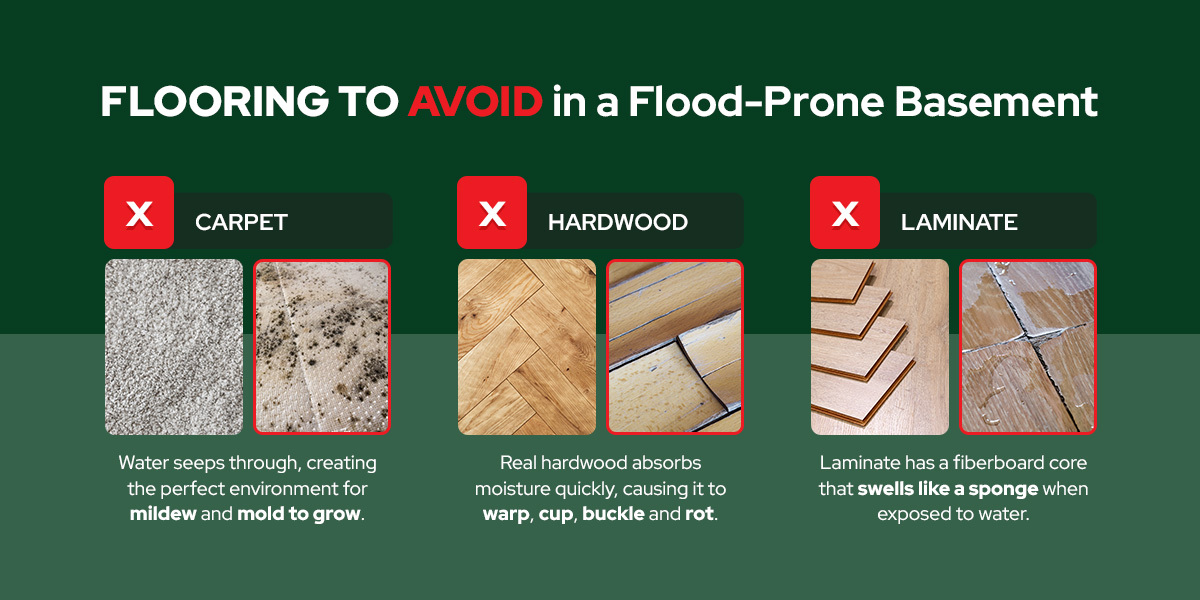
Not all flooring can handle basement moisture. If you need flooring for basements that flood, avoid these popular options. They might work beautifully upstairs, but will cause headaches and costly replacements in flood-prone spaces.
Carpet
Water seeps into carpet fibers and padding, creating the perfect environment for mildew and mold to grow. Once soaked, carpet becomes nearly impossible to fully dry, and the musty odor from the constant dampness can linger for months. Even professional cleaning may not successfully reverse water damage to carpet.
Hardwood
Real hardwood absorbs moisture quickly, causing it to warp, cup, buckle and rot. Even engineered hardwood struggles in damp environments, and refinishing water-damaged wood floors costs a fortune. If you love the look of wood, choose waterproof LVT instead.
Laminate
While its wooden look is stylish, laminate has a fiberboard core that swells like a sponge when exposed to water. Once damaged, you'll need to replace entire sections. Laminate might be affordable up front, but replacement costs add up fast in moisture-prone basements.
Key Considerations Before You Buy
Choosing a waterproof flooring option provides protection, but your subfloor does the heavy lifting. How you prepare your space and install your flooring determines whether it lasts for decades. Here's what you need to know.
Subfloor Preparation
Your subfloor matters as much as the floor on top, so it requires the right prep work. Starting with a clean, dry, level surface helps your investment last for years and look flawless. Skipping this step can lead to issues such as buckling or visible imperfections.
If you're planning to install tile, proper underlayment is your secret weapon for preventing cracks and creating a rock-solid base. For LVT, the prep work is just as important — any bump or debris can "telegraph" through to the surface. Fortunately, proper installation helps you avoid these issues and achieve gorgeous results.
Mold and Mildew Prevention
Even with waterproof flooring, mold and mildew can grow if moisture becomes trapped beneath it. Proper subfloor preparation, vapor barriers and adequate ventilation matter. Sealing your foundation, installing a dehumidifier and ensuring good airflow all help keep mold at bay.
Professional Installation vs. DIY
LVT and click-lock vinyl planks are more DIY-friendly, while tile and epoxy typically call for professional skills and tools. Professional installation gets your floor right the first time and takes the guesswork out of the process — here's what to expect at every step. If you're considering DIY, check out the easiest flooring to install to find options that suit your skill level.
Water Damage Restoration
Waterproof flooring makes basement flood cleanups easier and more cost-effective. Here's what restoration usually looks like for each waterproof option:
- LVT: Mop up any standing water, dry the surface thoroughly and inspect for damage such as lifting, bubbling, separating seams or discoloration. If individual planks are damaged, you can remove and replace just those pieces without redoing the entire floor. It's one of the most cost-effective solutions for flood recovery.
- Porcelain tile: After removing standing water, focus on drying out the grout lines. The tiles themselves rarely suffer water damage, so your cleanup costs stay minimal. You might need to reseal grout, but the tiles will likely look as good as new.
- Epoxy flooring: Water sits on the epoxy surface and wipes away easily. Simply dry the floor completely, and you're done. No replacement or repairs — just a quick cleanup that saves you time and money.
Find the Perfect Flood-Proof Flooring at Carpet & Tile Mart
Finding flooring for flood-prone basements is easier than you think! Carpet & Tile Mart offers a wide selection of waterproof flooring options — including luxury vinyl tile, porcelain tile and epoxy — to fit any style and budget.
With 14 locations across Pennsylvania, Delaware and New Jersey, you can see and feel your flooring options in person before you buy. Plus, with our 150% in-store price-match guarantee, you'll shop with confidence knowing you're getting the best value.
Our expert team can help you choose a solution that protects your investment and gives you peace of mind for years to come. Visit your local Carpet & Tile Mart and discover the difference for yourself, or contact us online to get started today!